
Williamson County Report Window
The Williamson County Sheriff's Office posts no multi-day or weekly arrest log on its site. No posting window or photo rule appears either. Illinois does have a 72-hour arrest-information rule. That law is an access benchmark for chronologically kept records, not a web blotter.
So the timeline must be built source by source. WCSO Records keeps sheriff incident reports and inmate jail files. Marion Police releases often turn into dated news stories. Regional outlets choose the cases that draw eyes. The Circuit Clerk holds the later court trail. None of these sources forms one complete list, and a name can appear in one while missing from all the others.
A weekend review needs a wider range than the publication calendar. A Friday arrest may surface in a release or a story days later. One Monday article can gather several prior dates. Record the arrest or citation date inside each item. Then log the article date, any booking date, and any court date separately. Holidays stretch the gap. Williamson County has published no rule measuring it. That method shows the delay honestly, without inventing a countywide weekend surge or treating a news archive as complete.
Read Williamson Arrest Reports
Start with the event, not the headline. Note the arrest date, publication date, agency, city, charge, and stated custody destination. A citation is not a booking. If the article says a person was cited or released, do not recast it as a Williamson County Jail booking. Jail status can change fast. A person named at the jail may have been released or transferred after publication, so confirm separately.
- Search the arresting agency’s official notices and ask its records office for the dated report.
- Review WCSO records when the sheriff made the arrest or the county jail received the person.
- Compare local articles by event date, not merely by the date a story was posted.
- Use the Circuit Clerk’s linked case search to identify later filings, orders, and disposition.
- For rolled-off material, request the record, then consult local newspaper and archive holdings.
This Dateline Marion police report shows how an agency release differs from a live booking list.
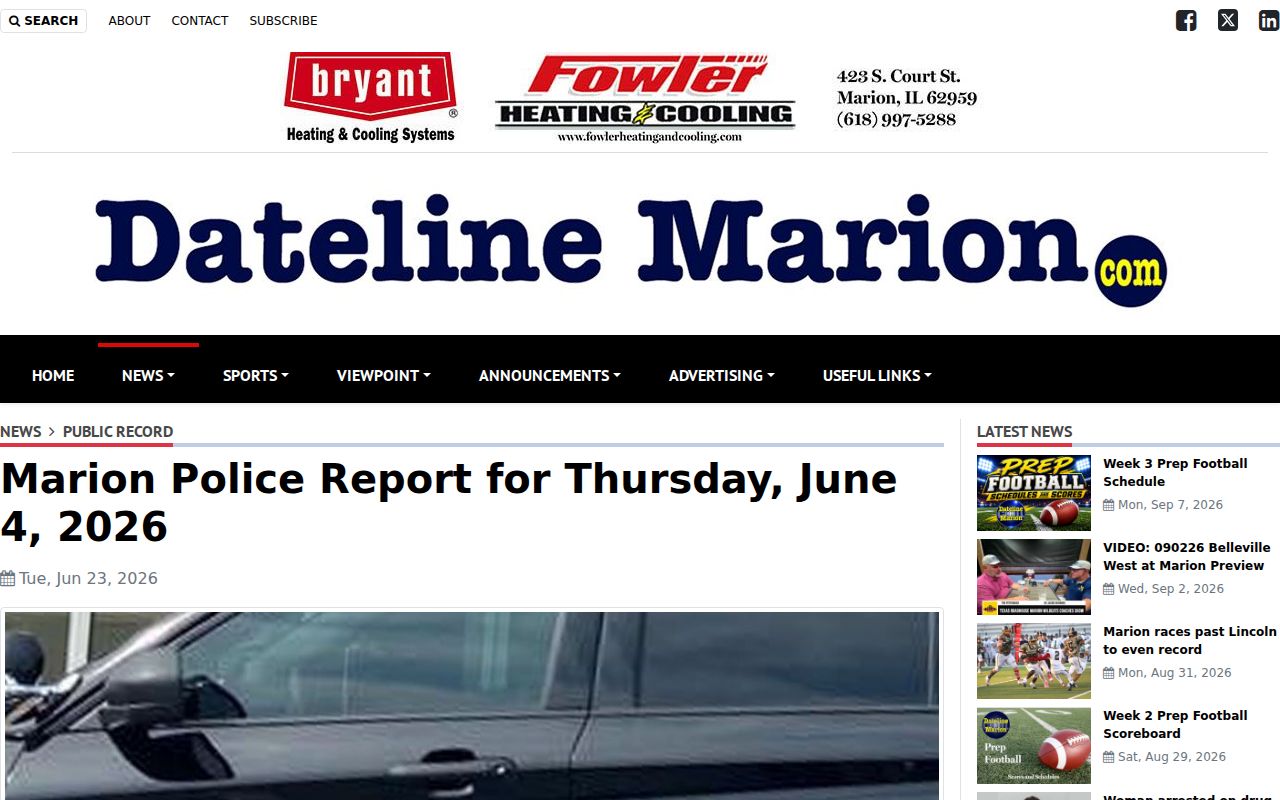
The format keeps names, ages, places, charges, and dates. It is episodic, however, and shows neither current custody nor complete Williamson County coverage.
Williamson Report Entry Fields
Williamson County publishes no portal that defines these fields. Treat the table as a reading checklist rather than a claim about any official system. A police report describes the event itself. A jail record covers the booking, a news article selects facts, and a court docket tracks filed charges. Label the source beside every fact.
| Field | How to read it |
|---|---|
| Event date | The stated arrest or citation date, not necessarily booking or publication. |
| Publication date | When an outlet posted its report; it may lag the event. |
| Agency and city | The police or sheriff source and local jurisdiction. |
| Charge as reported | An charge at that stage, subject to amendment or dismissal. |
| Custody destination | The stated receiving jail or release path, requiring current verification. |
| Photo source | Booking image, supplied image, news photo, or illustration only if identified. |
| Case and disposition | Later court information, separate from the arrest report. |
A report without a photo is still a report. Neither the sheriff's office nor local news publishes a fixed booking-photo policy. Pictures in TV or newspaper stories may come from agencies, scenes, files, or newsroom graphics, so never assume the type.
Williamson’s Release-Driven Blotter
Blotter-style coverage in this county runs on agency releases and editorial choice. Dateline Marion is the steadiest recurring source. It runs dated Marion Police reports, and The Daily Republican has published blotter items too. Southern Illinois Now covers chases, warrants, and Carterville matters. KBSI/FOX23 and KFVS12 also report regionally. The Southern Illinois Now report shows how one Carterville-related story can pull in several agencies during a handoff.
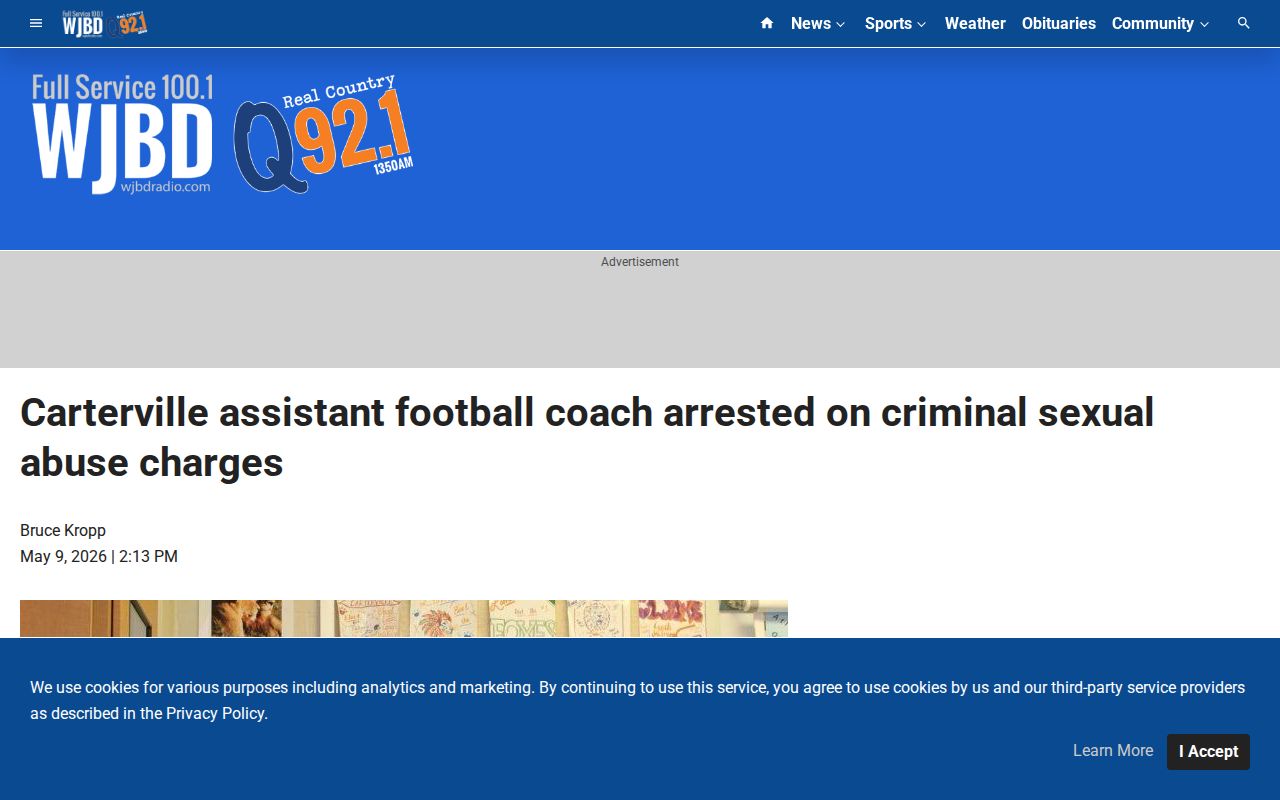
Useful context is not a roster. A story adds detail an arrest list never could. It can't show current custody. An agency handoff can scatter a single case. The arrest city, the booking county, and the current facility may all be different places. A KFVS12 story about a Williamson County arrest is one such event-specific example, preserving a report long after custody changes. A news archive helps locate an old event, but the courts, not the archive, settle what happened to the charge.
Unofficial Williamson Arrest Archives
Private Williamson County archive pages reach back further than a news cycle. Check official sources first, always. RecentlyBooked bills its county page as a rolling 30-day view. Busted Newspaper offers a deep archive of booking-style entries. Mugshots.com keeps older name and date navigation. Mugshots.zone lists county-local entries. Arrests.org carries no Williamson County, Illinois section, and its Texas page with the same name is the wrong jurisdiction entirely.
These services can copy, omit, rename, or hold data long after official status changes. A date alone proves no custody. Deep archives are not the sheriff's retention schedule either. Confirm any entry with WCSO Records, the arresting agency, and the court.
Note: Third-party pages are discovery leads only and may not reflect release, acquittal, dismissal, sealing, expungement, or corrected identity data.
Older Williamson Arrest Reports
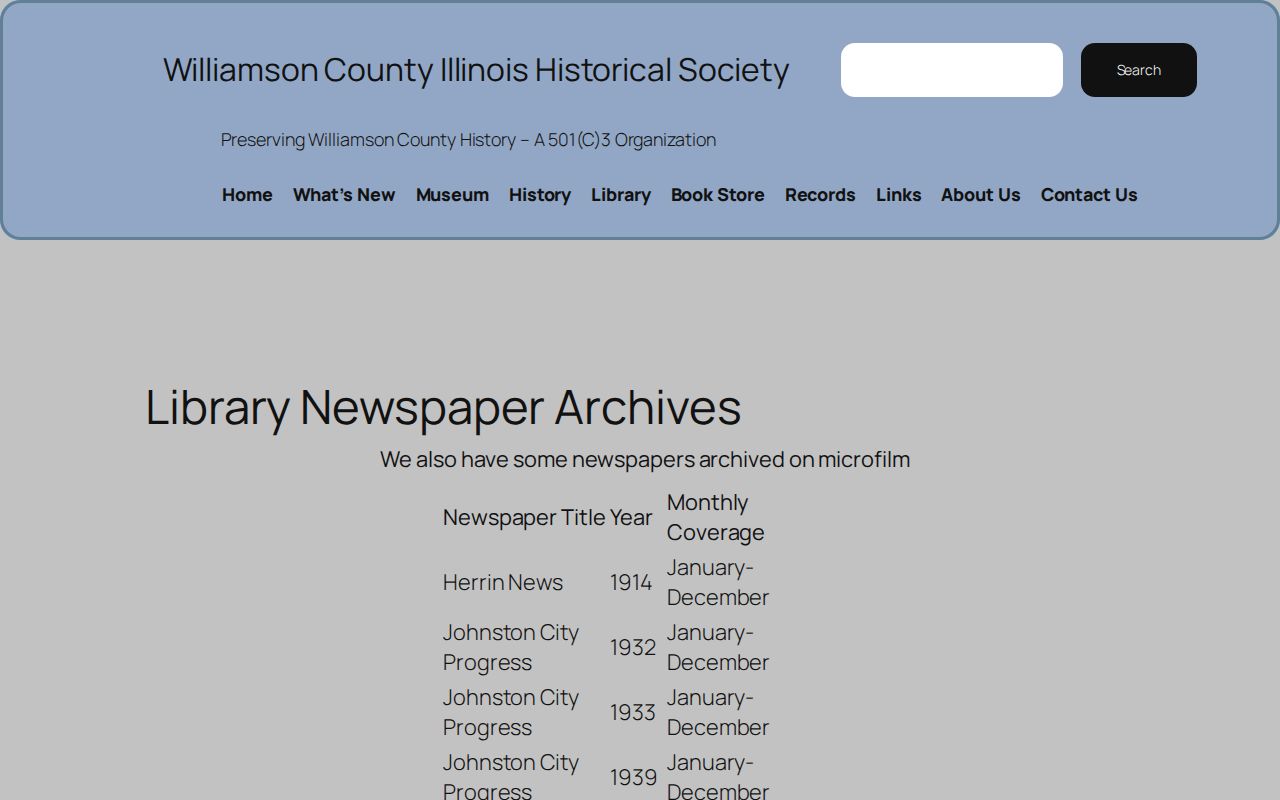
How long does Williamson County keep its booking records? Nobody publishes a schedule. The WCSO Records Unit says it retains inmate jail files, but it names no number of years and promises nothing online. Name the file you want. Ask for the retention rule if timing matters. Records sits at 404 N. Van Buren Street, Marion, IL 62959; the main line is (618) 997-6541, extension 1308. Older Williamson County arrests often live in newsprint instead, and the Williamson County Historical Society newspaper archive holds microfilm for Marion, Herrin, Johnston City, and county titles.
Historical questions call for old records. Williamson County material sits in the Illinois Regional Archives Depository at Southern Illinois University. A Sheriff's Process Dockets, Criminal series there covers 1938 through 1941. IRAD is no inmate finder. Modern mugshots are not part of its promise. To trace a past matter, name the agency and year, request its arrest record, then search the Circuit Clerk, IRAD, and local newspaper collections for what survives. Note conflicts rather than picking the dramatic version.
Williamson Charges and Dispositions
An arrest report marks a beginning. Prosecutors decide which charges to file. Courts may dismiss, amend, acquit, convict, or divert. The Williamson County Circuit Clerk links to Judici for public case information and keeps the official court records. Judici can require interface controls and proves nothing about custody.
A same-day question belongs on the Arrested Today page. The multi-day method here compares releases, articles, official records, and later dockets over time. Old articles are not live jail status.
Need something older than a publisher displays? Begin with the agency and the approximate event date. Request the sheriff or city record, then use the Circuit Clerk for the filed case. Deeper history continues through the Illinois Regional Archives Depository at Southern Illinois University and the Williamson County Historical Society's newspaper holdings. IRAD holds a Sheriff's Process Dockets, Criminal series for 1938 through 1941, but it is no modern arrest log or photo source. Archives show what was preserved, not who is in custody today.